
Showing posts with label yoga. Show all posts
Showing posts with label yoga. Show all posts
Wednesday, December 25, 2013
Points To Be Followed Before Learning Yoga
Once you have decided to practice yoga for better living and spiritual health, you need to take care of the following points so as to prevent injuries to your physical self:

Thursday, December 12, 2013
Yoga Your Way to Physical and Mental Fitness
Although considered by many simply as an exercise fad, yoga practice has in fact helped thousands of people in improving their physical and mental fitness. Remember the golden rule of never judging a book by its cover; if you think that yoga’s all about bending and breathing and nothing else, think again.


Wednesday, December 11, 2013
How to find the right Yoga teacher?
Want to practice Yoga but don't know how to pick a Yoga teacher right for you? Read this!
I am often asked by beginners about how to evaluate a Yoga Teacher?
The following is the “CALM check list.” These factors are basic criteria that your Yoga Instructor should meet before you continue on to a second Yoga class.
I am often asked by beginners about how to evaluate a Yoga Teacher?
The following is the “CALM check list.” These factors are basic criteria that your Yoga Instructor should meet before you continue on to a second Yoga class.
Friday, December 6, 2013
Benefits of 20 different types of yoga for your Health
Yoga is effective to prevent and cure several health problems. But each yoga style has certain health benefits; hence it is important to know what the different types of yoga are and how it can help you. Following are a list of yoga styles and its benefits.

History of yoga:
Yoga is thought to date back to atleast 3000BC and has been practiced in India to promote physical, mental and spiritual health for millennia. The first text on classical Yoga was written by a legendary Yogi called Patanjali. His path towards self-knowledge is known as "ASHTANGA YOGA" or eight limbed yoga, as it consists of 8 steps to enlightenment. These steps help to discipline the body, mind, breath, emotions and spirit.
Yoga is thought to date back to atleast 3000BC and has been practiced in India to promote physical, mental and spiritual health for millennia. The first text on classical Yoga was written by a legendary Yogi called Patanjali. His path towards self-knowledge is known as "ASHTANGA YOGA" or eight limbed yoga, as it consists of 8 steps to enlightenment. These steps help to discipline the body, mind, breath, emotions and spirit.
Benefits Of Padangusthasana
This is one of the basic yoga asanas which we learn initially while learning yoga. All the yoga poses help in improving your flexibility which becomes very useful in our daily life. The asana is also known as head to foot pose. Your desire to regulate your blood pressure can be done by this asana. The pressure on your head and the stretching of the muscles relaxes your brain, making you work out things more easily and calmly. The stretching and pulling tones your body and relaxes you by making you feel at ease. The bending helps your abdominal organs as it massages the liver and spleen making it useful to the optimum level.


Thursday, November 21, 2013
Benefits of Chair Yoga – Part 4
Chair Yoga can easily work in harmony with most physical rehabilitation prescriptions. Many physical therapists have knowledge of Yoga or are teachers of Yoga. Many doctors, physical therapists, and medical professionals recommend Yoga to patients who are making a “come back.”
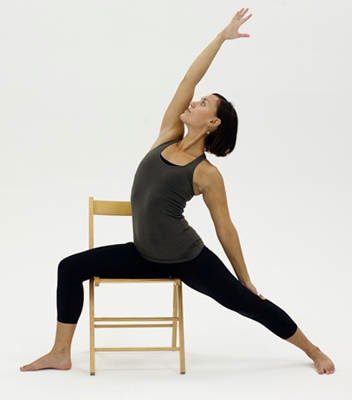
Benefits of Chair Yoga – Part 3
Flexibility is considered to be a “by product” of Yoga practice, but in the case of Chair Yoga, it is often “down played” or taken for granted. Since most Chair Yoga enthusiasts are seniors, the true value of flexibility is mobility.
When you consider that mobility for seniors can be the difference between dependence and independence, flexibility is now of extreme value.

When you consider that mobility for seniors can be the difference between dependence and independence, flexibility is now of extreme value.

Sunday, November 17, 2013
Benefits of Chair Yoga – Part 2
We have all heard the saying, “Rome wasn’t built in a day.” Those words are extremely profound, when thinking about correcting poor posture and alignment. It takes years to create poor alignment.
Benefiting From Your Yoga Practice
Yoga is not only an extremely popular form of exercise, but depending on the form you practice, can be exciting or calming, social or meditative, energizing or relaxing. No matter which of these best describes your yoga class, here are a few tips to help you get the most out of every class you attend.
Benefits of Chair Yoga – Part 1
In comparison to many forms of exercise, the benefits of Chair Yoga far outweigh the risks. The therapeutic exercises work the body, from head to toes, to the best of any client’s ability.
Thursday, October 17, 2013
Benefit of Yoga Part I
Yoga has many benefits for natural health that can have a profound effect on your mind, body and spirit. You may be surprised by the multitude of ailments that can be remedied by including Yoga into your daily life.
The practice of Yoga brings with it many physical and emotional benefits that the majority of people are unaware of. This article is quite long, so we have broken it up into two parts. The first part is an introduction to Yoga and a overview of the major physical and psychological benefits of Yoga, while the second part shows how practicing yoga daily can have a profound effect on your ability to create a healthy lifestyle for yourself.
Yoga is a science; and indeed, in many places in the world (such as India), it is referred to as a science. This is not merely playing with words; it truly is approached as a science, which means that it is understood in terms of scientific methods.
Yogic science seeks to verify cause and effect, and build principles based upon objective observations. Indeed, in many places in the world, to be a yogic master of any credibility, one must be highly educated in the sciences, including physics and the biological sciences.
This discussion on yoga as science is important for us to include because it allows us to sensibly ask the question: what are the benefits of yoga? After all, if yoga is a faith or a belief, then asking this question isn't fair; because it's one that yoga cannot answer in terms that we can objectively understand.
Yoga is a science; as empirical and pragmatic as kinesiology, or exercise science, which seeks to understand how the body acts and reacts to changes in the internal physical environment. And even more simply than any of this: each of us has a right to ask the basic question, "why should I bother practicing yoga and what experience or benefits can I expect?"
Indeed, while the experience of yoga cannot be reduced to words – just as reading a book on preparing for a marathon isn't going to actually physically prepare you to run a marathon – the goals and principles of yoga can easily be discussed.
Here's the Mayo Clinic's take on the benefits of meditation:
"Meditation is used by people who are perfectly healthy as a means of stress reduction. But if you have a medical condition that's worsened by stress, you might find the practice valuable in reducing the stress-related effects of allergies, asthma, chronic pain and arthritis, among others."
Yoga involves a series of postures, during which you pay special attention to your breathing — exhaling during certain movements and inhaling with others. You can approach yoga as a way to promote physical flexibility, strength and endurance or as a way to enhance your spirituality.
Yoga is centered on the mind-body connection. This mind-body harmony is achieved through three things:
- postures (asanas)
- proper breathing (pranayama)
- meditation
Mind and body draw inspiration and guidance from the combined practices of asanas, breathing, and meditation. As people age (to yogis, ageing is an artificial condition), our bodies become susceptible to toxins and poisons (caused by environmental and poor dietary factors).
Yoga helps us through a cleaning process, turning our bodies into a well synchronized and well-oiled piece of machinery.
By harmonizing these three principles, the benefits of yoga are attained. And just what are these benefits?
- equilibrium in the body’s central nervous system
- decrease in pulse
- respiratory and blood pressure rates
- cardiovascular efficiency
- gastrointestinal system stabilization
- increased breath-holding time
- improved dexterity skills.
- Improved balance
- Improved depth perception
- Improved memory
As noted above, Yoga also delivers an array of psychological benefits; and in fact, this is a very common reason why people begin practicing it in the first place. Perhaps the most frequently mentioned psychological benefit of yoga is an improved ability to manage stress. Yoga diminishes an individual’s levels of anxiety, depression, and lethargy; thus enabling him/her to focus on what’s spiritual and important: achieving balance and happiness.
In part II of the Benefit of Yoga we'll reveal how yoga can help deal with stress, unhealthy habits and pain management. The benefits of Yoga go far beyond meditation and stretching, it is a way to release those toxic emotions that tend to stand in the way of living a healthy life.
The practice of Yoga brings with it many physical and emotional benefits that the majority of people are unaware of. This article is quite long, so we have broken it up into two parts. The first part is an introduction to Yoga and a overview of the major physical and psychological benefits of Yoga, while the second part shows how practicing yoga daily can have a profound effect on your ability to create a healthy lifestyle for yourself.
Yoga is a science; and indeed, in many places in the world (such as India), it is referred to as a science. This is not merely playing with words; it truly is approached as a science, which means that it is understood in terms of scientific methods.
Yogic science seeks to verify cause and effect, and build principles based upon objective observations. Indeed, in many places in the world, to be a yogic master of any credibility, one must be highly educated in the sciences, including physics and the biological sciences.
This discussion on yoga as science is important for us to include because it allows us to sensibly ask the question: what are the benefits of yoga? After all, if yoga is a faith or a belief, then asking this question isn't fair; because it's one that yoga cannot answer in terms that we can objectively understand.
Yoga is a science; as empirical and pragmatic as kinesiology, or exercise science, which seeks to understand how the body acts and reacts to changes in the internal physical environment. And even more simply than any of this: each of us has a right to ask the basic question, "why should I bother practicing yoga and what experience or benefits can I expect?"
Indeed, while the experience of yoga cannot be reduced to words – just as reading a book on preparing for a marathon isn't going to actually physically prepare you to run a marathon – the goals and principles of yoga can easily be discussed.
Here's the Mayo Clinic's take on the benefits of meditation:
"Meditation is used by people who are perfectly healthy as a means of stress reduction. But if you have a medical condition that's worsened by stress, you might find the practice valuable in reducing the stress-related effects of allergies, asthma, chronic pain and arthritis, among others."
Yoga involves a series of postures, during which you pay special attention to your breathing — exhaling during certain movements and inhaling with others. You can approach yoga as a way to promote physical flexibility, strength and endurance or as a way to enhance your spirituality.
The Mind-Body Connection
Yoga is centered on the mind-body connection. This mind-body harmony is achieved through three things:
- postures (asanas)
- proper breathing (pranayama)
- meditation
Mind and body draw inspiration and guidance from the combined practices of asanas, breathing, and meditation. As people age (to yogis, ageing is an artificial condition), our bodies become susceptible to toxins and poisons (caused by environmental and poor dietary factors).
Yoga helps us through a cleaning process, turning our bodies into a well synchronized and well-oiled piece of machinery.
Physical Benefits
By harmonizing these three principles, the benefits of yoga are attained. And just what are these benefits?
- equilibrium in the body’s central nervous system
- decrease in pulse
- respiratory and blood pressure rates
- cardiovascular efficiency
- gastrointestinal system stabilization
- increased breath-holding time
- improved dexterity skills.
- Improved balance
- Improved depth perception
- Improved memory
Psychological Benefits
As noted above, Yoga also delivers an array of psychological benefits; and in fact, this is a very common reason why people begin practicing it in the first place. Perhaps the most frequently mentioned psychological benefit of yoga is an improved ability to manage stress. Yoga diminishes an individual’s levels of anxiety, depression, and lethargy; thus enabling him/her to focus on what’s spiritual and important: achieving balance and happiness.
In part II of the Benefit of Yoga we'll reveal how yoga can help deal with stress, unhealthy habits and pain management. The benefits of Yoga go far beyond meditation and stretching, it is a way to release those toxic emotions that tend to stand in the way of living a healthy life.
Thursday, October 10, 2013
Ashtanga Yoga - Is it right for you?
Ashtanga Yoga is the type of yoga which was urbanized and founded by K. Pattabhi Jois. This kind of yoga is known as the Eight Limb Yoga which has revolved in Pattanjali's massive idea. It presented that the path of purification is made up of the eight spiritual practices.

Ashtanga Yoga is the type of yoga which was urbanized and founded by K. Pattabhi Jois. This kind of yoga is known as the Eight Limb Yoga which has revolved in Pattanjali's massive idea. It presented that the path of purification is made up of the eight spiritual practices.
The first four limbs that represent Ashtanga Yoga are - yama, niyama, Asana and the Pranayama. These are considered cleansing practices which are externally correctable. The other set of limbs which are the - pratyahara, dhyana, dharana are the internal practices.
These limbs can only be corrected by the appropriate application of the Ashtanga Yoga method. This type of yoga method is quite dangerous to the mind.
K. Pattabhi Jois said that practicing these Eight Limbs and also its sub-limbs of the external practices which include the niyama and yama is not possible. In doing so, the body should be strong enough so that it can perform the practices. If the body is weak, and the sense organs are not functioning well, practicing will never be useful to the person at all.
The philosophy which K. Pattabhi Jois has applied is that you must keep in mind that after doing this Ashtanga Yoga the body will improve and it will be stronger and healthier.
Vinsaya and Tristhana are practiced in Ashtanga Yoga.
The Vinsaya is a style that makes Ashtanga and its principles discrete from the others. Vinsaya means the movement and breathing which is used for the internal cleansing process. Each movement done is accompanied by only one breath. Sweat is the most important product of Vinsaya. When you produce sweat, it only means that you are successfully applying the practice. When you perform the Asanas, the body creates heat which causes your blood to boil and excrete the toxins outside of your body. The toxins are found in your sweat. So the more sweat you create, the more toxins are released.
These yoga poses are used to fully develop the strength and health of the body. The series of practices make this possible. There are three postures used in Ashtanga Yoga.
The three are classified on different levels.
The first is the Primary Series which aims on aligning the body and also detoxifying it.
The second is the Intermediate Series opening and cleaning the energy channels which comes to the process of purifying the Nervous System.
The last series would be the Advanced Series from A to D. in this series, the grace and strength is measured.
The Tristhana is another yoga principle which represents the union of the three places of action and attention. First is the posture, second is the breathing technique ad last is the Dristhi of the Looking Place. All these three should work altogether to perform a function.
Breathing techniques are simultaneous and synchronized. It is important to make a single breath for one movement. Ujjayi Breathing is the Yoga Breathing Technique used in the application of Ashtanga Yoga. Applying this technique must be prolonged after every practice. What you need to master is holding your pose longer at the same time hold your breath. This is an amazing breathing exercise that will increase your internal fire and will strengthen the Nervous System.
Setting the mind clear and cleansing it can only be done in the Eight-Limb Yoga or Ashtanga Yoga.
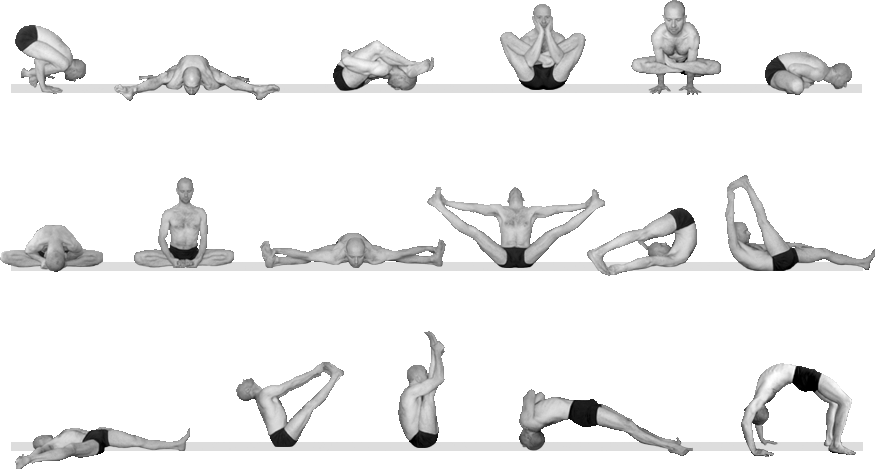
Ashtanga Yoga is the type of yoga which was urbanized and founded by K. Pattabhi Jois. This kind of yoga is known as the Eight Limb Yoga which has revolved in Pattanjali's massive idea. It presented that the path of purification is made up of the eight spiritual practices.
The first four limbs that represent Ashtanga Yoga are - yama, niyama, Asana and the Pranayama. These are considered cleansing practices which are externally correctable. The other set of limbs which are the - pratyahara, dhyana, dharana are the internal practices.
These limbs can only be corrected by the appropriate application of the Ashtanga Yoga method. This type of yoga method is quite dangerous to the mind.
K. Pattabhi Jois said that practicing these Eight Limbs and also its sub-limbs of the external practices which include the niyama and yama is not possible. In doing so, the body should be strong enough so that it can perform the practices. If the body is weak, and the sense organs are not functioning well, practicing will never be useful to the person at all.
The philosophy which K. Pattabhi Jois has applied is that you must keep in mind that after doing this Ashtanga Yoga the body will improve and it will be stronger and healthier.
Vinsaya and Tristhana are practiced in Ashtanga Yoga.
The Vinsaya is a style that makes Ashtanga and its principles discrete from the others. Vinsaya means the movement and breathing which is used for the internal cleansing process. Each movement done is accompanied by only one breath. Sweat is the most important product of Vinsaya. When you produce sweat, it only means that you are successfully applying the practice. When you perform the Asanas, the body creates heat which causes your blood to boil and excrete the toxins outside of your body. The toxins are found in your sweat. So the more sweat you create, the more toxins are released.
These yoga poses are used to fully develop the strength and health of the body. The series of practices make this possible. There are three postures used in Ashtanga Yoga.
The three are classified on different levels.
The first is the Primary Series which aims on aligning the body and also detoxifying it.
The second is the Intermediate Series opening and cleaning the energy channels which comes to the process of purifying the Nervous System.
The last series would be the Advanced Series from A to D. in this series, the grace and strength is measured.
The Tristhana is another yoga principle which represents the union of the three places of action and attention. First is the posture, second is the breathing technique ad last is the Dristhi of the Looking Place. All these three should work altogether to perform a function.
Breathing techniques are simultaneous and synchronized. It is important to make a single breath for one movement. Ujjayi Breathing is the Yoga Breathing Technique used in the application of Ashtanga Yoga. Applying this technique must be prolonged after every practice. What you need to master is holding your pose longer at the same time hold your breath. This is an amazing breathing exercise that will increase your internal fire and will strengthen the Nervous System.
And you thought Yoga Was Just Stretching | Yoga Li...
7 Best Important Tips for Yoga Success
Setting the mind clear and cleansing it can only be done in the Eight-Limb Yoga or Ashtanga Yoga.
Tuesday, October 8, 2013
And you thought Yoga Was Just Stretching | Yoga Living
What was once ridiculed as a bizarre fad is today seen as a basic skill and many people who looked upon Yoga as a stunt or physical regimen set aside for only the flexible have now accepted it as a way of life. With its combination of poses, breathing exercises and principles, Yoga, my friends is way more than just a stretching routine.
 While on the way to spot a friend of mine at the local YMCA, he asked why I didn’t just join the gym and I explained to him that I practice Yoga and occasional calisthenics at home for my exercises and really didn’t feel the need for a gym membership. His response was predictable: “Yoga…isn’t that just stretching?”
I smirked at the familiarity of the question and proceeded to explain to him the theme of this article. As I told him and for those who may not know otherwise: No, Yoga is way more than just stretching or getting into supposedly awkward looking poses and positions.
It is a combination of stretching, breathing exercises, meditation and perhaps the most overlooked limb, adherence to a proper diet.
The word yoga, from the Sanskrit word yuj means to yoke or bind and is often interpreted as a "union" or a method of discipline. Its ultimate goal is the union of man with God or the universe in one breath. Furthermore, it aims to liberate the spirit as the mind and spirit are equally involved in its practice.
Yoga is indeed the oldest existing physical-culture system in the world. Besides being a systematic and scientifically proven path to attaining physical fitness, it delays aging, rejuvenates and improves one’s appearance, maintains suppleness and increases vitality and the creative part of life.
With its core warm-up exercises known as the Sun Salutations (which are somewhat similar to the calisthenics exercise known as ‘burpees’), the inversion poses, forward and backward bending poses, balancing exercises for the arms and building focus, the average practitioner will attest to the fact that for attaining fitness, Yoga can stand its own.
Think Yoga can’t help with building strength? Think again. Heck, I challenge the most adept body-builder to hold the simple yet powerful peacock-pose for 90 seconds straight. Bet you they’d crash half-way in its execution-if they make it that far.
Yoga also offers unique breathing exercises which are wonderful for patients with respiratory disorders and even singers and public speakers, moreover with its unique relaxation pose, oft times practiced during and after its execution, Yoga offers a systematic means of deeply relaxing the entire body perhaps the way no other exercise can. (Keep in mind of course that several of the poses give a deep body massage not unlike the ones received in salons…just thought I should throw that in.)
With countless books, DVD’s, videos and classes being offered for all ages, levels of fitness and experience (some of them being actually free for the first couple of lessons to try Yoga out), I suggest you give it a trial and see for yourself what it can do.
One thing I promise you is this; you will walk out of your class and nod in agreement that indeed: “yoga is way more than just stretching.” It is THE exercise.

I smirked at the familiarity of the question and proceeded to explain to him the theme of this article. As I told him and for those who may not know otherwise: No, Yoga is way more than just stretching or getting into supposedly awkward looking poses and positions.
It is a combination of stretching, breathing exercises, meditation and perhaps the most overlooked limb, adherence to a proper diet.
The word yoga, from the Sanskrit word yuj means to yoke or bind and is often interpreted as a "union" or a method of discipline. Its ultimate goal is the union of man with God or the universe in one breath. Furthermore, it aims to liberate the spirit as the mind and spirit are equally involved in its practice.
Yoga is indeed the oldest existing physical-culture system in the world. Besides being a systematic and scientifically proven path to attaining physical fitness, it delays aging, rejuvenates and improves one’s appearance, maintains suppleness and increases vitality and the creative part of life.
With its core warm-up exercises known as the Sun Salutations (which are somewhat similar to the calisthenics exercise known as ‘burpees’), the inversion poses, forward and backward bending poses, balancing exercises for the arms and building focus, the average practitioner will attest to the fact that for attaining fitness, Yoga can stand its own.
Think Yoga can’t help with building strength? Think again. Heck, I challenge the most adept body-builder to hold the simple yet powerful peacock-pose for 90 seconds straight. Bet you they’d crash half-way in its execution-if they make it that far.
Yoga also offers unique breathing exercises which are wonderful for patients with respiratory disorders and even singers and public speakers, moreover with its unique relaxation pose, oft times practiced during and after its execution, Yoga offers a systematic means of deeply relaxing the entire body perhaps the way no other exercise can. (Keep in mind of course that several of the poses give a deep body massage not unlike the ones received in salons…just thought I should throw that in.)
With countless books, DVD’s, videos and classes being offered for all ages, levels of fitness and experience (some of them being actually free for the first couple of lessons to try Yoga out), I suggest you give it a trial and see for yourself what it can do.
One thing I promise you is this; you will walk out of your class and nod in agreement that indeed: “yoga is way more than just stretching.” It is THE exercise.
Monday, October 7, 2013
7 Best Important Tips for Yoga Success
Yoga has been proven to relieve stress by using exercises that unify the mind, body, and spirit. If you are new to yoga, these seven tips will start you on the road to a more centered life.
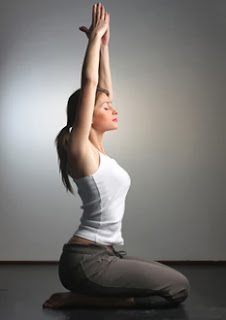
Yoga has been proven to relieve stress by using exercises that unify the mind, body, and spirit. If you are new to yoga, these seven tips will start you on the road to a more centered life.

1. Talk to your doctor and explain what type of yoga poses you intend to practice. Show your doctor pictures of the poses for illustration. Your doctor may rule out specific poses if you have high blood pressure, glaucoma, a history of retinal detachment, or heart disease. Make sure you follow your doctor’s recommendations.
2. Find a yoga class that best fits your abilities. Talk to prospective teachers, and decide whether of not you can handle a program before you sign up. It’s very important to take it one step at a time. Try a few beginner classes before you attempt more vigerous classes. Don’t move ahead too quickly. Allow your body to adjust to your exercises.
3. Listen to your body and be aware of your physical abilities. You don't want to hurt yourself. Make sure the instructor understands your level of experience and any limitations you may have. Don’t allow anyone to push you ahead too quickly. Remember, this is supposed to be fun and relaxing.
4. If you can’t find a class that meets your needs, you can always practice yoga at home. There are many books, programs, and tapes available to help you get started. Search for the best products on the Internet and read reviews. Talk to others for recommenations.
5. Why not try private lessons? You can book some one-on-one sessions with a teacher in your area. Most yoga instructors offer private classes or can help you design your own program. This is a good way to get started. You can always take group lessons or practice at home after you’ve had private lessons and learned the basics.
6. Find a yoga buddy. It’s nice to practice with someone and it will help reduce injuries. It’s also a great way to keep up your enthusiasm and interest.
7. Eat lightly before practice. Wait at least two hours after meals before yoga class or practice. An empty stomach is best, but don’t let yourself get too hungry to think. You won't be able to focus on the poses or enjoy yourself during the relaxation or meditation exercises.
Now it's time to grab your mat and a towel and get the most out of your yoga exercises.